Summer Camp Registrations are Open!
Give your kids and youth an experience to remember this summer!


What if the greatest gap in our lives is not what we believe, but how we live?
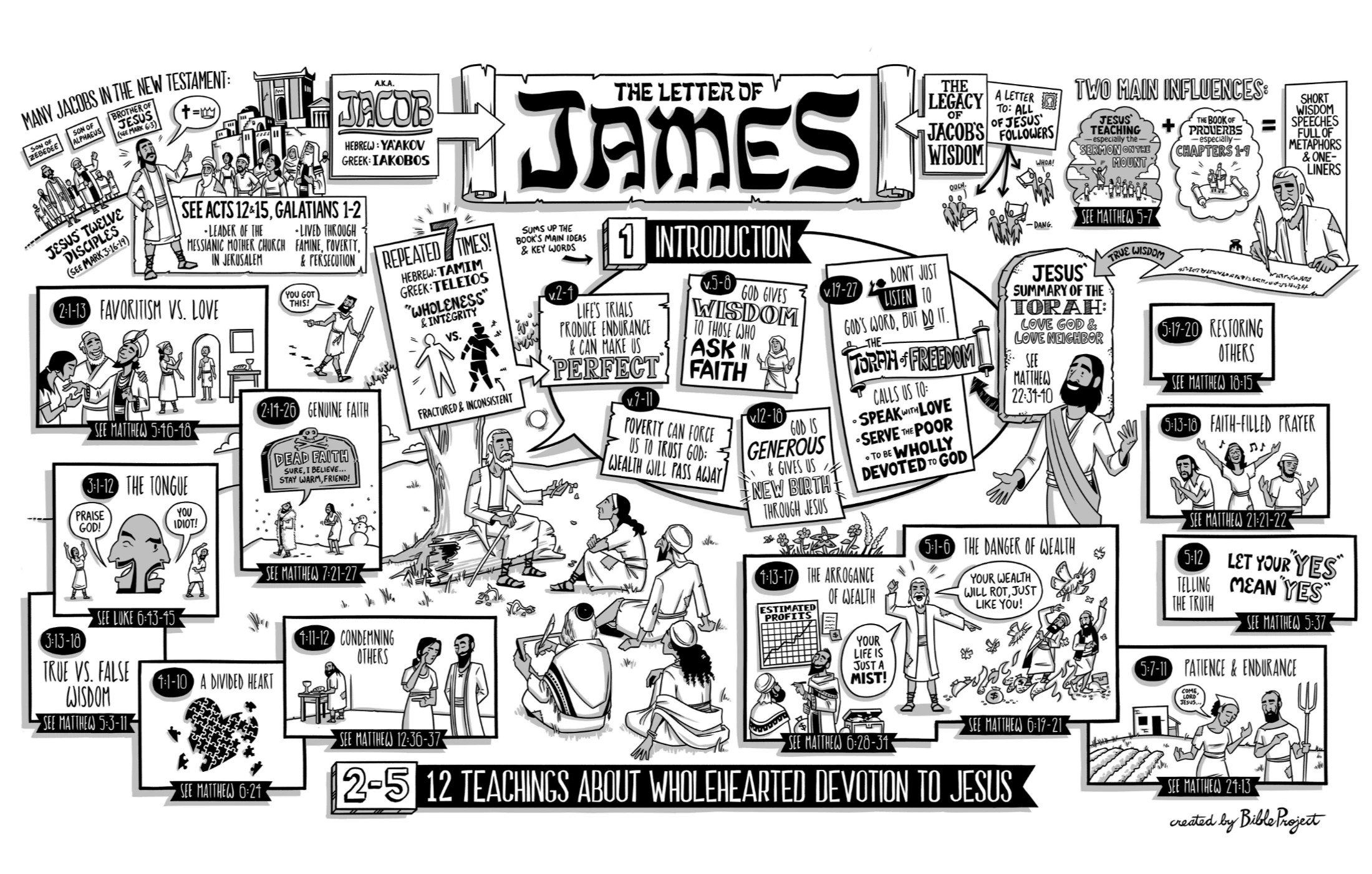
The book of James speaks directly into that tension, calling us into a faith that is not just heard but lived, not just professed but practiced. Written to believers scattered under pressure, James paints a picture of a fully integrated life where trust in Jesus reshapes everything. Our trials, our words, our relationships, our ambitions, our use of money, and our care for others all become places where real faith is revealed. This is a call to wholeness, to become people whose lives are aligned with the wisdom of God rather than the patterns of the world.
Throughout this series, we will see how faith is formed in the fire of trials, how our desires can either draw us toward God or pull us away, and how true wisdom shows up not in what we say but in how we live. We will be challenged to move beyond surface level belief into a faith that acts, speaks life, pursues justice, and reflects mercy. James confronts our divided hearts while continually pointing us back to a God who gives grace, wisdom, and strength for every step.
This is not just a study of a letter. It is an invitation to transformation. A call to become the kind of people who do not just talk about faith, but embody it. And as we walk through this book together, we will discover that the life Jesus calls us to is deeper, richer, and far more powerful than we ever imagined.
Sunday, April 12, 2026
James 1:1-12
Big Idea:
God uses real life trials to grow steady, wholehearted faith. So we ask for wisdom, refuse double mindedness, and learn to see hardship as formation, not abandonment.
Synopsis:
What if the pressures you want removed are actually the very places God is doing His deepest work? James opens his letter not with comfort, but with a challenge that reshapes how we see hardship. Trials are not interruptions to our faith, they are instruments of formation. In a world that avoids pain and pursues comfort, James calls us to a radical perspective: to consider it joy when life presses in. Not because suffering is good, but because God is at work through it, producing endurance and shaping a mature, steady faith. Yet this kind of perspective does not come naturally. We need wisdom. God invites us to ask, promising to give generously without finding fault. The danger is not the trial itself, but a divided heart that wavers between trust and doubt. As James lifts our eyes, he reminds us that God’s kingdom reverses worldly values and rewards those who remain steadfast. This is not about surviving trials, but being transformed through them.
Gospel Lens:
Jesus is the ultimate example of steadfast endurance, who endured the cross for the joy set before Him and now offers us His life through every trial. In Christ, we are not abandoned in suffering but invited into a deeper participation in His refining work. The crown of life promised here is secured through Him and shared with all who love Him.
Supplementary Readings:
Practical Applications:
Sunday, April 19, 2026
James 1:13-27
Big Idea:
Temptation does not come from God but from disordered desire, yet God gives good gifts, new birth through His Word, and calls us to receive that Word and live it in tangible obedience.
Synopsis:
Why do we so often blame God for things He never authored? James confronts one of the deepest human tendencies: shifting responsibility for our struggles onto God, others, or circumstances. But temptation does not begin out there, it begins within. Our desires, when left unchecked, can quietly lead us down a path that ends in destruction. Yet in contrast to our instability stands a God who never changes, who only gives what is good, and who has given us new life through His Word. The question then becomes: what will we do with that Word? It is possible to sit in church, hear truth, even agree with it, and yet remain unchanged. James calls us beyond passive listening into active obedience. Real faith does not stop at hearing, it moves into doing. And the evidence of that kind of faith is seen in how we speak, how we care for the vulnerable, and how we live with integrity in a compromised world. This is not about religious performance, but a transformed life that reflects the heart of God.
Gospel Lens:
Jesus is the perfect embodiment of the Word lived out, resisting temptation where we fail and fulfilling righteousness on our behalf. Through Him, we are not only forgiven for our sin but given new birth and the power to walk in obedience. The gospel does not just inform us, it transforms us from the inside out.
Supplementary Readings:
Practical Applications:
Sunday, May 3, 2026
James 2:1-13
Big Idea:
The gospel kills status games in the church, so we reject partiality, fulfill the royal law of love, and let mercy shape how we treat people and how we judge.
Synopsis:
Who gets your attention, your time, and your honor and why? James brings the gospel into one of the most visible and uncomfortable areas of our lives: how we treat people. In a culture that elevates status, wealth, influence, and appearance, it is easy to unknowingly adopt the same values within the church. But James is clear. Favoritism has no place in the family of God. When we show preference to some and neglect others, we are not just being impolite, we are contradicting the very heart of the gospel. God has chosen those the world often overlooks, and His kingdom operates on a completely different set of values. The call is to live by the royal law of love, to love our neighbor as ourselves, not selectively, but consistently. This passage exposes the subtle ways we categorize people and calls us back to a mercy shaped life. Because in the end, those who have received mercy are meant to extend it. Mercy is not weakness. It is the evidence of a transformed heart.
Gospel Lens:
Jesus is the one who welcomed the overlooked, the outsider, and the sinner without partiality, and ultimately gave His life to bring all people into God's family. At the cross, status is leveled and mercy is extended to all who believe. Because we have received mercy, we are now called to reflect that same mercy to others.
Supplementary Readings:
Practical Applications:
Sunday, May 10, 2026
James 2:14-26
Big Idea:
Saving faith is never alone, and real trust in God becomes visible through costly, concrete obedience that serves others, like Abraham and Rahab.
Synopsis:
What if the faith we claim is not the faith we actually live? James confronts one of the most misunderstood and confronting truths in the Christian life. Faith that stays in words alone is not real faith. It may sound right, it may look convincing, but if it does not move into action, it is lifeless. James is not arguing against salvation by grace. He is exposing the kind of faith that never truly takes root. Real faith breathes. It moves. It responds. It shows up in how we live, how we serve, and how we trust God in costly ways. Using the examples of Abraham and Rahab, James shows that genuine faith is always accompanied by obedience. It is not that works save us, but that saving faith always produces works. This passage calls us to examine our lives, not just our beliefs. Because in the end, faith is not proven by what we say, but by what we do.
Gospel Lens:
Jesus lived the perfect life of obedience we could never live and secured our salvation by grace alone. Yet the same grace that saves us also transforms us, producing a living faith that reflects His life in us. We do not work for salvation, but from it, as evidence that we truly belong to Him.
Supplementary Readings:
Practical Applications:
Sunday, May 17, 2026
James 3:1-12
Big Idea:
Because words have outsized power and reveal the heart, disciples must pursue Spirit governed speech that blesses rather than destroys.
Synopsis:
What if one of the most powerful forces shaping your life is something you use every day without thinking? James turns our attention to the tongue, a small part of the body with enormous influence. With just a few words, we can build up or tear down, bring healing or cause lasting damage. James gives a sobering warning, especially to those who teach or lead. Words carry weight. They shape people, influence direction, and reveal what is truly happening beneath the surface of our hearts. The issue is not just what we say, but what our words expose. A life that praises God on Sunday but tears people down during the week reveals a deeper inconsistency that cannot be ignored. True spiritual maturity is seen in our speech. While no one can tame the tongue on their own, this passage drives us to a deeper dependence on God, inviting Him to transform our hearts so that our words begin to reflect His character.
Gospel Lens:
Jesus is the Word made flesh who always spoke truth with grace, never sinning in what He said, and using His words to bring life and restoration. Through Him, our hearts are renewed and our speech can be transformed by the Spirit. The gospel does not just change what we say, it changes the source from which our words flow.
Supplementary Readings:
Practical Applications:
Sunday, May 24, 2026
James 3:13-18
Big Idea:
True wisdom shows up as humble, peaceable fruit, not self promotion. So we measure maturity less by opinions and more by peacemaking.
Synopsis:
What if the way we define wisdom is completely off? In a world that prizes influence, intelligence, and self-advancement, James invites us to look deeper. True wisdom is not measured by what we know or how persuasive we are, but by how we live. It is revealed in humility, gentleness, and a life that reflects the character of God. James draws a sharp contrast between two kinds of wisdom. One is driven by envy and selfish ambition, producing disorder and broken relationships. It may look impressive on the surface, but it leads to chaos beneath. The other comes from above. It is pure, peace loving, considerate, submissive, full of mercy, and sincere. This kind of wisdom does not just inform decisions, it transforms relationships. In the end, wisdom is not about winning arguments or gaining status. It is about becoming the kind of person who brings peace wherever they go, planting seeds of righteousness that reflect the heart of God.
Gospel Lens:
Jesus is the wisdom of God in human form, embodying humility, purity, and peace in every aspect of His life. Through Him, we are invited out of selfish ambition and into a new way of living shaped by His Spirit. The gospel forms in us a wisdom that reflects Christ and produces lasting fruit.
Supplementary Readings:
Practical Applications:
Sunday, May 31, 2026
James 4:1-12
Big Idea:
Our conflicts flow from desires at war inside us. The path to peace is repentance, submitting to God, humility, resisting the devil, drawing near to Him, and receiving grace.
Synopsis:
What if the conflicts around you are actually revealing something deeper within you? James pulls back the curtain on our struggles and exposes a hard truth. The conflicts we experience externally often begin internally. Our desires, when they take center place in our hearts, begin to compete with God and with others. What starts as a longing can quickly become a demand, and when that demand is not met, it leads to frustration, division, and even destruction. James does not soften the language. He calls it what it is: spiritual adultery. A divided heart that tries to hold onto God while also clinging to the values of the world. But right in the middle of this strong rebuke is a greater promise: God gives more grace. The invitation is clear. Humble yourself. Submit to God. Resist the devil. Draw near to Him. This is not about behavior modification, but heart transformation. The path to peace is not found in getting what we want, but in surrendering to the One who gives us what we truly need.
Gospel Lens:
Jesus is the one who fully submitted to the Father, resisting every temptation and laying down His life in humility. Through Him, we receive grace that not only forgives our divided hearts but transforms them. The gospel invites us out of rivalry and into restored relationship with God and others.
Supplementary Readings:
Practical Applications:
Sunday, June 7, 2026
James 4:13-5:6
Big Idea:
Since our lives are fragile and our wealth is accountable to God, we live with humble dependence and practice generosity and justice instead of pride and self-reliance.
Synopsis:
What if the plans you are most confident in are built on something far more fragile than you realize? James confronts the illusion of control that so easily shapes our lives. We make plans, set goals, and speak with certainty about tomorrow, yet James reminds us that our lives are like a mist, here for a moment and then gone. The issue is not planning, but pride. It is living as though God is not part of the equation. But James does not stop there. He turns to the misuse of wealth and the quiet ways injustice can take root when success becomes our security. Hoarded resources, withheld wages, and self-indulgence reveal hearts that have drifted from God’s purposes. What looks like prosperity on the surface can actually be spiritual decay underneath. This passage calls us back to humble dependence, reminding us that everything we have and every day we are given is held in the hands of God. Life is brief, but what we do with it carries eternal weight.
Gospel Lens:
Jesus, though rich, became poor for our sake, showing us a radically different way to view wealth, power, and security. Through Him, we are freed from the grip of self-reliance and invited into a life of trust and generosity. The gospel reorients our hearts from storing up treasures on earth to living for what lasts forever.
Supplementary Readings:
Practical Applications:
Sunday, June 14, 2026
James 5:7-12
Big Idea:
In suffering we do not numb out or lash out, but endure with patient hope, steady truthfulness, and resilient faith because the Lord is near.
Synopsis:
What do you do when God does not move as quickly as you hoped? James speaks into the tension of waiting, especially in seasons of hardship and injustice. The call is not to rush, complain, or give up, but to endure with a steady and rooted hope. Like a farmer waiting for the harvest, we are invited to trust that something is happening beneath the surface even when we cannot yet see it. James points us to those who have gone before us, the prophets who remained faithful in suffering and Job who wrestled deeply yet ultimately encountered the compassion and mercy of God. Their lives remind us that waiting is not wasted. It is a space where faith is strengthened and where God’s purposes are unfolding. In the middle of uncertainty, James also calls for integrity. Let your yes be yes and your no be no. A life anchored in hope is also marked by truthfulness and consistency. This is a slow, steady hope rooted not in circumstances, but in the nearness and faithfulness of God.
Gospel Lens:
Jesus endured suffering with perfect patience, entrusting Himself to the Father and securing our ultimate hope through His resurrection. Because He is coming again, our waiting is not empty but filled with promise. The gospel anchors us in a hope that sustains us through every season of delay.
Supplementary Readings:
Practical Applications:
Sunday, June 21, 2026
James 5:13-20
Big Idea:
The church becomes a healing community when we pray in every season, confess honestly, care for the sick, and pursue wanderers back to life.
Synopsis:
What if the most powerful thing we could do in every season of life is often the thing we neglect the most? James closes his letter by bringing us back to the foundation of a vibrant, living faith: prayer. Not just in moments of crisis, but in every circumstance. When we suffer, we pray. When we rejoice, we praise. When we are weak, we invite others to stand with us. This is not a picture of isolated faith, but a deeply connected community where people are honest about their struggles, humble to confess, and committed to praying for one another. James reminds us that prayer is not passive. It is powerful and effective because it connects us to a God who moves. Even Elijah, a person like us, saw God work in extraordinary ways through persistent prayer. And then the focus shifts outward. Faith is not only about personal growth, but about pursuing others. When someone begins to wander, the call is not to ignore them, but to lovingly bring them back. This is a community shaped by grace, truth, love and restoration.
Gospel Lens:
Jesus is our great High Priest who intercedes for us, making a way for us to approach God with confidence in prayer. Through His finished work, we are invited into restored relationship with God and one another. The gospel forms a praying, restoring community that reflects His heart.
Supplementary Readings:
Practical Applications: